
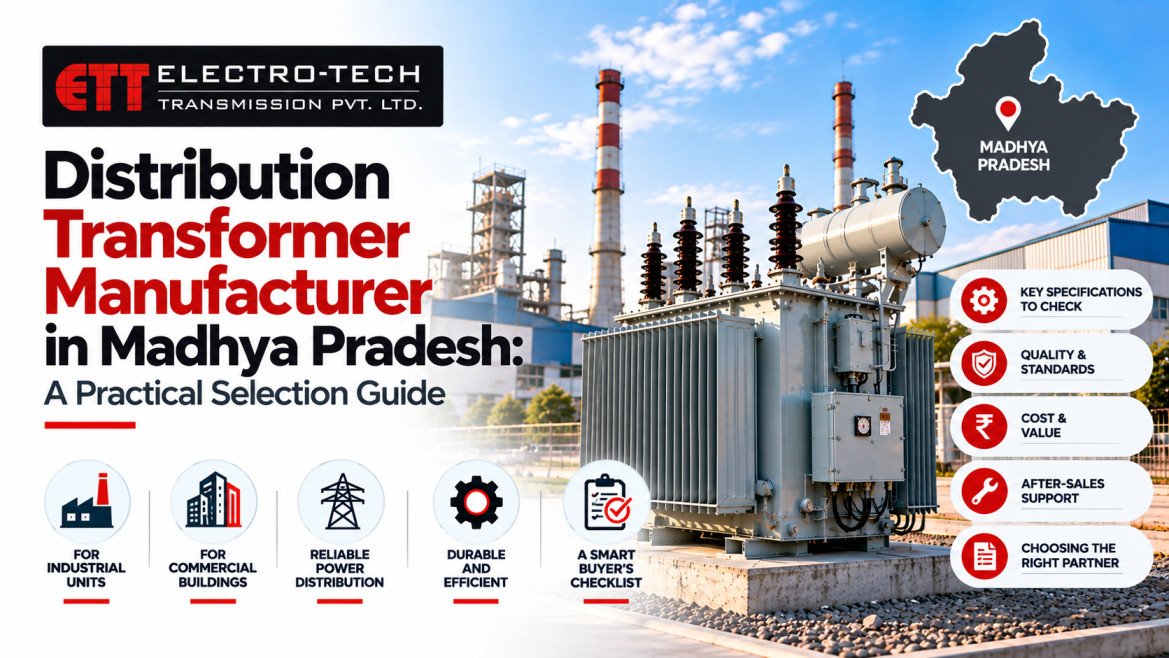
Distribution transformers are essential for supplying electricity at suitable voltage levels to factories, commercial buildings, industrial facilities, and infrastructure projects. Selecting the right transformer is important for reliable power distribution, energy efficiency, and long-term operating costs.
For businesses searching for a distribution transformer manufacturer in Madhya Pradesh, the selection process should go beyond comparing prices. Buyers need to consider electrical requirements, transformer capacity, energy losses, applicable standards, installation conditions, and after-sales support.
This practical guide explains what to evaluate before choosing a distribution transformer for an industrial or commercial project.
1. Understand Your Project Requirements
Before contacting a manufacturer, establish the electrical requirements of your installation. This helps suppliers recommend equipment that meets your actual operating needs.
Consider the following factors:
- Total connected electrical load.
- Maximum expected demand.
- Primary and secondary voltage requirements.
- Phase configuration and system frequency.
- Motor starting currents and fluctuating loads.
- Expected future expansion.
- Installation environment and operating conditions.
For example, a manufacturing facility with motors, compressors, and production machinery may have a different load profile from a warehouse or office complex.
A qualified electrical engineer should assess the load and determine the appropriate transformer rating before procurement.
2. Select the Appropriate Transformer Capacity
Distribution transformer capacity is generally expressed in kilovolt-amperes (kVA). Choosing the right rating requires an assessment of expected demand rather than simply adding the nameplate wattage of every connected appliance.
An undersized transformer may struggle to meet peak demand, while an oversized unit can increase initial costs and may not operate as efficiently under certain loading conditions.
When evaluating capacity, consider:
- Maximum simultaneous demand.
- Power factor.
- Starting currents from motors and other equipment.
- Load fluctuations throughout the day.
- Planned machinery additions or facility expansion.
Request a capacity recommendation based on your project’s load assessment. The final rating should be verified against the electrical design and applicable requirements.
3. Compare Transformer Specifications
Two distribution transformers with similar kVA ratings may have different electrical and operational characteristics.
Before comparing quotations, prepare a consistent specification sheet that includes:
| Specification | What to verify |
|---|---|
| Rated capacity | Required kVA rating |
| Voltage ratio | Primary and secondary voltages |
| Frequency | Compatibility with the electrical system |
| Phase configuration | Suitability for the installation |
| Cooling method | Appropriate cooling arrangement |
| Insulation | Required insulation system and temperature limits |
| Losses | Guaranteed no-load and load losses |
| Accessories | Required protection devices and fittings |
| Installation | Indoor or outdoor suitability |
| Documentation | Drawings, datasheets, and test reports |
Providing the same requirements to each supplier makes it easier to compare products on a like-for-like basis.
4. Evaluate Energy Efficiency and Operating Costs
A transformer’s purchase price is only one part of its total cost of ownership. Energy losses accumulated over years of operation can also contribute significantly to operating expenses.
Transformer losses are generally classified into two categories:
- No-load losses: Occur when the transformer is energised, even when little or no load is connected.
- Load losses: Generally increase as the transformer carries more electrical load.
When evaluating distribution transformers in Madhya Pradesh, request guaranteed loss figures from manufacturers and compare them under consistent technical conditions.
Also consider expected operating hours, typical loading, electricity tariffs, and the initial purchase price. A transformer with lower losses may provide long-term savings, especially in facilities that operate continuously.
The actual financial benefit depends on the transformer’s loading pattern and the difference in cost between the available options.
5. Check Quality Standards and Testing Documentation
Before placing an order, verify that the proposed transformer meets the applicable Indian Standards and the project’s technical requirements.
Ask the manufacturer for relevant documentation, which may include:
- Technical datasheets and approved drawings.
- Applicable standards and compliance information.
- Routine test reports.
- Details of any required additional tests.
- Quality inspection procedures.
- Warranty documentation.
Testing and inspection requirements should be agreed upon before manufacturing or dispatch, particularly for projects with specific client or consultant approval procedures.
Clear documentation helps buyers verify that the proposed equipment matches the agreed specifications.
6. Evaluate the Manufacturer’s Capabilities
When choosing a distribution transformer manufacturer in India, assess the supplier’s ability to meet your project’s technical and commercial requirements.
Product suitability
Confirm that the manufacturer offers the required capacity, voltage ratio, cooling arrangement, and accessories.
Manufacturing and quality control
Ask about the manufacturing process, inspection procedures, and quality documentation relevant to the proposed model.
Technical support
Check whether technical assistance is available during specification, installation planning, and commissioning.
Warranty and service
Review warranty coverage, exclusions, service arrangements, and the process for resolving technical issues.
Delivery schedule
Confirm manufacturing lead time, transportation arrangements, and the expected delivery date.
ETT Groups lists distribution transformers in its product portfolio. Buyers can explore the ETT distribution transformer range and contact the company to discuss their project requirements.
Confirm current product specifications, availability, warranty conditions, and delivery timelines directly with the supplier.
7. Consider Installation and Site Conditions
A transformer must be suitable for the environment in which it will operate.
Before finalising the purchase, review:
- Available installation space and required clearances.
- Indoor or outdoor installation conditions.
- Ambient temperature and ventilation.
- Earthing and electrical protection requirements.
- Access for transportation, installation, and maintenance.
- Applicable electrical and fire-safety requirements.
Oil-filled and dry-type transformers have different installation and maintenance considerations. The appropriate design depends on the project layout, operating conditions, and applicable requirements.
Installation and commissioning should be performed by qualified personnel in accordance with the approved electrical design and the manufacturer’s instructions.
8. Compare Quotations Beyond the Initial Price
A low quotation may not provide the best overall value if it excludes essential accessories, documentation, testing, or support.
When comparing offers, check the following:
- Whether the transformer meets the complete technical specification.
- Guaranteed no-load and load losses.
- Included accessories and protection equipment.
- Testing and inspection arrangements.
- Warranty coverage and exclusions.
- Delivery and installation-related costs.
- Availability of technical support and maintenance guidance.
Compare the total cost of equipment that meets the same requirements rather than selecting a supplier based only on the quoted price.
Frequently Asked Questions
1. How do I choose a distribution transformer manufacturer in Madhya Pradesh?
Prepare your technical requirements and compare manufacturers based on product suitability, applicable standards, testing documentation, guaranteed losses, warranty, delivery, and after-sales support.
2. What information is needed to select a distribution transformer?
Important details include the required capacity, primary and secondary voltages, maximum demand, phase configuration, load characteristics, installation environment, and future expansion plans.
3. Why are transformer losses important?
No-load and load losses contribute to electricity consumption during operation. Comparing guaranteed loss figures helps buyers evaluate potential long-term operating costs.
4. What documents should I request before ordering?
Depending on the project, request technical datasheets, drawings, applicable compliance documentation, test reports, warranty terms, and installation and maintenance instructions.
5. How can I compare transformer manufacturers fairly?
Provide each shortlisted manufacturer with the same technical specification sheet. Compare compliance, efficiency, testing, warranty, delivery timelines, and total quoted costs.
Conclusion
Choosing a distribution transformer requires a clear understanding of electrical demand, capacity, voltage requirements, efficiency, installation conditions, and long-term operating costs.
Businesses looking for a distribution transformer manufacturer in Madhya Pradesh should compare equipment against consistent technical specifications and verify quality documentation before ordering.
Explore the ETT distribution transformer range to review available options and discuss your industrial or commercial project’s requirements with the supplier.