
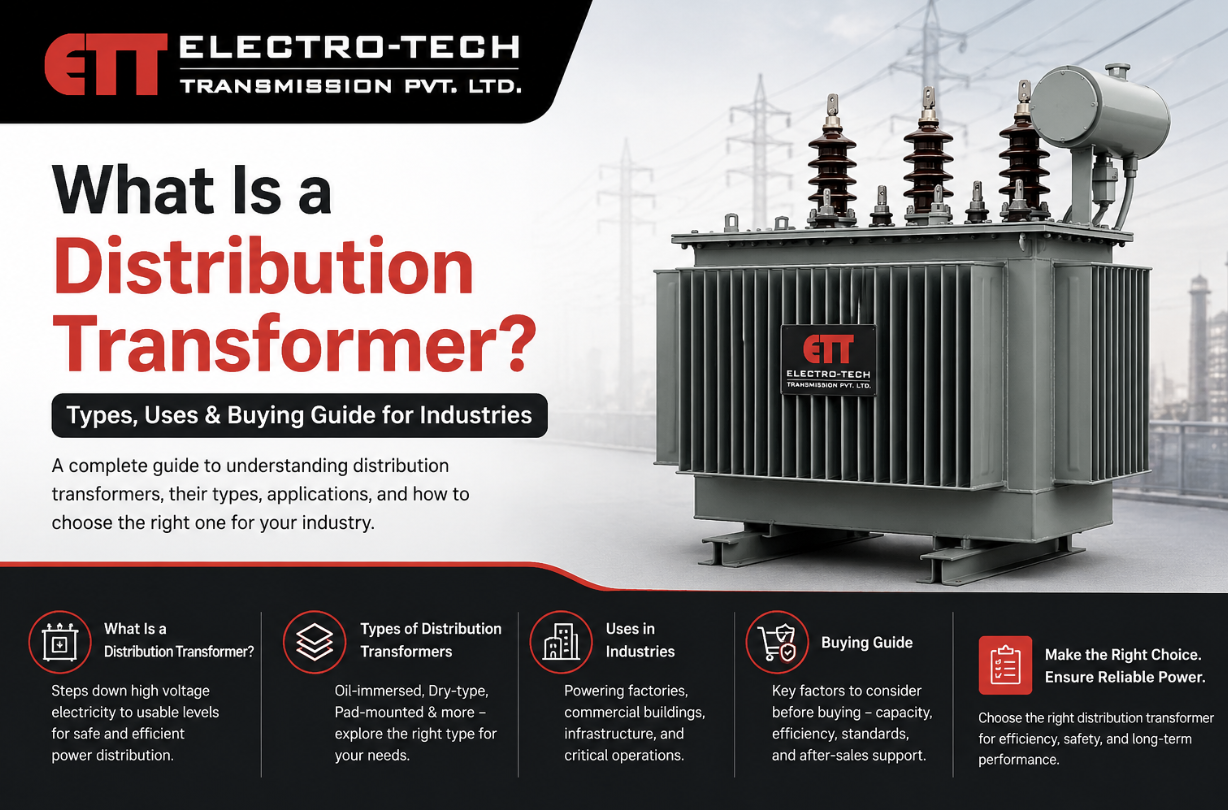
What Is a Distribution Transformer? Types, Uses & Buying Guide for Industries
A distribution transformer is a critical electrical device that steps down voltage from the distribution network to a level that can be safely used by homes, commercial buildings, and industrial facilities. It is the final stage in the power delivery chain, making electricity usable for everyday operations.
For industries, distribution transformers matter because they help ensure stable power, protect equipment, and support efficient energy use. Choosing the right transformer can improve reliability, reduce losses, and lower maintenance costs over time.
What a distribution transformer does
A distribution transformer reduces higher distribution voltage to lower usable voltage for end users. In simple terms, it converts electricity from the grid into a form that machines, lighting systems, office equipment, and industrial loads can use safely.
These transformers are widely used in the last stage of electric power distribution, where consistent voltage and dependable operation are essential.
Main types of distribution transformers
Distribution transformers are commonly classified in several ways, including mounting style, insulation type, and phase configuration.
- Pole-mounted transformers: Installed on utility poles and commonly used in overhead distribution systems.
- Pad-mounted transformers: Installed on the ground, often in underground distribution networks and commercial areas.
- Oil-immersed transformers: Use liquid insulation and cooling, often chosen for robust outdoor and industrial use.
- Dry-type transformers: Use air or solid insulation and are preferred where fire safety and indoor installation are priorities.
- Single-phase transformers: Common in smaller loads or specific local distribution applications.
- Three-phase transformers: Widely used in industrial and larger commercial installations because they handle heavier loads efficiently.
Common uses in industries
Industries use distribution transformers to supply power to machinery, lighting, HVAC systems, and other electrical loads. They are also important in plants, workshops, warehouses, manufacturing units, and commercial complexes where stable voltage is necessary.
Typical industrial applications include:
- Manufacturing plants.
- Processing units.
- Warehouses.
- Large office complexes.
- Commercial infrastructure.
- Utility and sub-distribution networks.
Because industrial operations depend on uninterrupted power, transformer reliability directly affects productivity and equipment life.
Key features industrial buyers should check
When selecting a distribution transformer for industrial use, the buyer should look at several technical and practical factors.
- Power rating: Match the transformer capacity to the connected load.
- Phase requirement: Choose single-phase or three-phase based on the application.
- Cooling and insulation type: Oil-immersed or dry-type depending on installation environment.
- Efficiency: Higher efficiency reduces energy loss and operating cost.
- Mounting style: Pole-mounted, pad-mounted, or indoor installation.
- Safety and compliance: Check relevant standards, build quality, and protection features.
- Maintenance needs: Choose a design that fits your service capability and operating conditions.
How to choose the right one for your industry
The best transformer depends on your voltage requirement, load profile, operating environment, and future expansion plans. A factory with continuous heavy machinery will often need a different setup from a warehouse or office campus.
Before buying, ask these questions:
- What is the total connected load?
- Will the load grow in the future?
- Is the transformer indoors or outdoors?
- Do you need low maintenance or high thermal endurance?
- Is your site better suited to dry-type or oil-immersed design?
- What level of efficiency is expected?
A proper load study and consultation with a qualified supplier can prevent oversizing, undersizing, and unnecessary downtime.
Buying guide for industries
Here is a practical buying guide for industrial buyers.
- Assess your load demand. Understand peak and average power requirements.
- Choose the right type. Decide between dry-type, oil-immersed, pole-mounted, or pad-mounted based on your site.
- Check voltage class and ratings. Confirm the transformer can handle your input and output voltage safely.
- Review efficiency and losses. Lower losses mean better long-term savings.
- Evaluate installation space. Some transformers need more room, ventilation, or protective housing.
- Ask about service support. Maintenance and spare-part availability matter for uptime.
- Verify quality and compliance. Industrial buyers should prioritize dependable construction and tested performance.
- Plan for future growth. A transformer should support not just today’s load, but tomorrow’s expansion too.
A distribution transformer is more than just a voltage converter. For industries, it is a core part of reliable and efficient power delivery. The right choice depends on your load, location, safety needs, and long-term operating goals.
If you are buying for industrial use, focus on capacity, efficiency, mounting type, and service reliability. A well-chosen transformer can support smoother operations, reduce power issues, and protect your equipment for years.
FAQs
What is a distribution transformer?
It is a transformer that steps down electrical voltage from the distribution network to a usable level for homes, businesses, and industries.
What are the main types of distribution transformers?
Common types include pole-mounted, pad-mounted, dry-type, oil-immersed, single-phase, and three-phase transformers.
Where are distribution transformers used?
They are used in residential, commercial, and industrial power distribution systems.
What should industries consider before buying one?
Industries should check load capacity, efficiency, cooling type, installation environment, and future expansion needs.
Why are distribution transformers important for industries?
They provide stable voltage, support equipment performance, and help reduce power-related downtime.