 December 11 2024
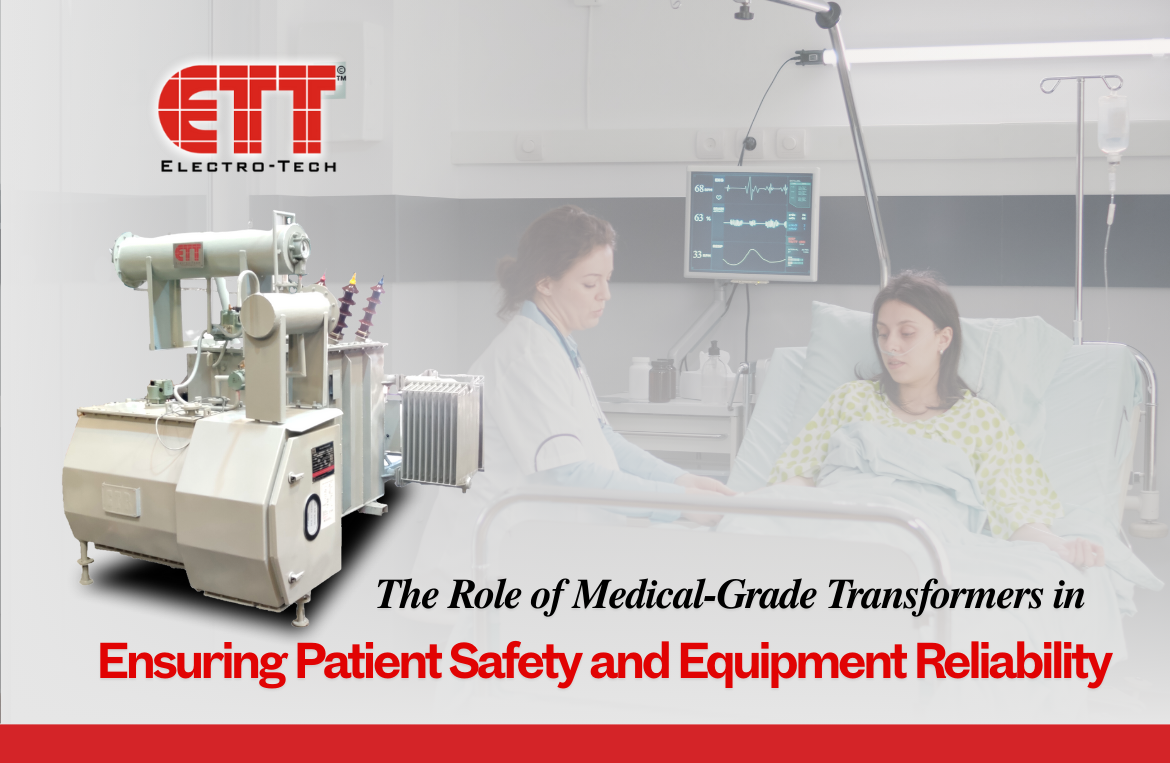
In the current healthcare environment, ensuring a secure and dependable power supply is crucial for the operation of key medical equipment. Transformer solutions for healthcare are vital to this infrastructure, providing distinctive features intended to safeguard patients, medical personnel, and the delicate equipment utilized. At Electrotech Transmission Pvt. Ltd. (ETT), our solutions are precisely designed to adhere to the highest standards of safety and performance. This blog explores the importance of these transformers, their unique advantages, and the industry standards governing their design.
Medical-grade transformers are specialized devices designed to regulate the distribution of electrical power in healthcare settings safely and efficiently. Unlike conventional transformers, these emphasize attributes that safeguard both patients and equipment. Key features include:
ETT’s commitment to delivering cutting-edge transformer solutions ensures that healthcare providers receive dependable power management systems tailored to their needs.
Patient and personnel safety is paramount in healthcare institutions, where even minor electrical risks can lead to serious consequences. Medical-grade transformers address these challenges by:
ETT’s solutions are indispensable in environments like operating rooms and intensive care units, where reliable power is crucial for life-saving operations.
Hospitals are equipped with advanced devices, many of which emit electromagnetic fields. These fields can disrupt the functionality of other medical instruments, compromising their accuracy and performance.
ETT’s Transformer Solutions: Designed to isolate medical devices from power sources that generate EMI, ETT’s transformers ensure critical equipment like ECG monitors operate reliably and deliver precise readings. By providing a clean and uninterrupted power supply, ETT enhances the overall efficiency of healthcare facilities.
For more insights into the role of EMI mitigation in healthcare, refer to this detailed study on electromagnetic interference in medical environments.
Medical-grade transformers must comply with strict safety and performance standards established by global organizations, including:
ETT’s transformers meet or exceed these international standards, ensuring dependable and safe solutions for the most demanding healthcare settings.
Different types of medical-grade transformers cater to various requirements in healthcare institutions:
ETT offers a comprehensive range of transformers customized to the unique needs of healthcare facilities, from small clinics to large hospitals.
Healthcare institutions face several power management challenges, including:
ETT continually innovates to address these challenges, providing solutions that support the evolving power management needs of healthcare facilities.
Healthcare providers benefit significantly from ETT’s medical-grade transformers, including:
ETT’s dedication to quality and innovation ensures it remains a trusted partner for healthcare organizations worldwide.
As medical technology advances, the need for dependable power management systems will grow. Next-generation medical devices will demand transformers that are exceptionally reliable and adaptable to new requirements.
ETT is at the forefront of these advancements, investing in research and development to deliver sustainable solutions. Our products are designed to support emerging healthcare technologies, ensuring long-term value and safety for medical facilities.
Medical-grade transformers play a critical role in ensuring patient safety and the reliability of medical equipment in healthcare settings. By offering electrical isolation, minimizing EMI, and maintaining a stable power supply, these transformers facilitate the seamless operation of essential devices.
ETT’s transformer solutions for healthcare meet the highest safety and performance standards, empowering healthcare providers to focus on delivering life-saving care. As technology evolves, ETT remains committed to developing solutions that protect patients and enhance the quality of healthcare services.

Electro-Tech Transmission Pvt. Ltd was established in the year 2014 with simple beginnings, for large scale impactful power and transformer solutions.
Copyright © 2021 All Rights Reserved.
Powered By
KreativoMarketing and Developed by Vesper Infotech
