 January 23 2026
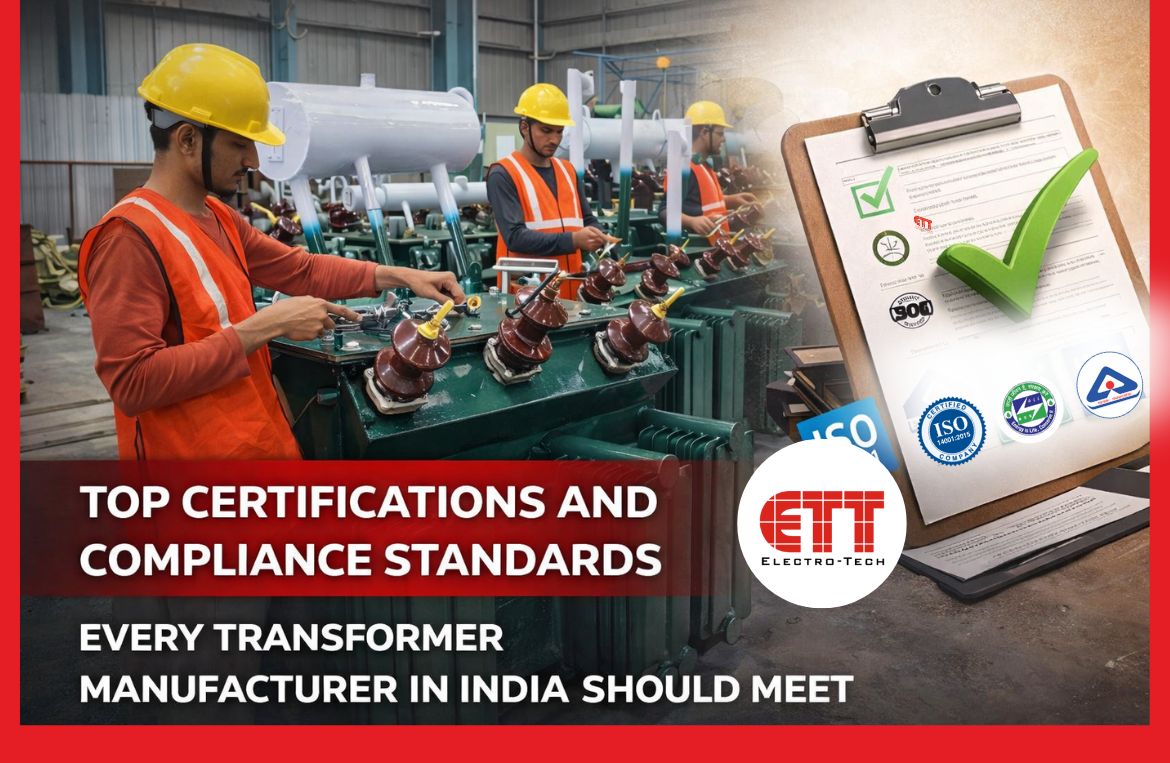
Transformers form the backbone of power generation, transmission, and distribution systems. A single failure can disrupt industries, cities, and critical infrastructure. This makes certifications and compliance standards not just regulatory requirements, but essential indicators of reliability, safety, and performance. For transformer manufacturers in India, meeting recognized national and international standards is key to winning trust from utilities, EPC contractors, OEMs, and global buyers.
As India strengthens its position as a global manufacturing hub, certifications have become a decisive factor in supplier selection. From BIS and BEE mandates to IEC and ISO compliance, certified manufacturers demonstrate technical competence, process maturity, and long-term reliability.
India is among the world’s largest producers of power and distribution transformers. Manufacturers cater to diverse segments such as power utilities, renewable energy projects, industrial plants, railways, metro systems, data centers, and EV infrastructure. This diversity requires strict adherence to multiple layers of compliance, ranging from domestic regulations to global export standards.
Certifications act as a common language between manufacturers and buyers, ensuring that products meet defined benchmarks for safety, efficiency, and durability.
The Bureau of Indian Standards (BIS) is the primary regulatory body governing transformer manufacturing in India. BIS standards ensure that transformers are designed, manufactured, and tested to perform reliably under Indian grid conditions.
IS 1180 (Part 1) applies to outdoor-type oil-immersed distribution transformers up to 2500 kVA and 33 kV. It focuses on:
The IS 2026 series covers power transformers and is aligned closely with IEC standards. It defines:
IS 3156 governs distribution transformers and specifies construction, performance, and testing requirements. Compliance with IS 3156 is mandatory for supplying to most Indian utilities.
The Bureau of Energy Efficiency (BEE) plays a critical role in promoting energy-efficient transformers. Its star rating program (1-star to 5-star) evaluates transformers based on:
Utilities and DISCOMs increasingly prefer 4-star and 5-star rated transformers to reduce technical losses and operational costs. For manufacturers, BEE compliance is essential to remain competitive in utility tenders.
ISO certifications demonstrate that a manufacturer follows internationally accepted management systems.
ISO 9001 ensures:
For transformer manufacturers, ISO 9001 is often the minimum qualification to participate in large-scale projects.
ISO 14001 reflects a manufacturer’s commitment to:
With increasing emphasis on green energy and ESG goals, this certification is becoming increasingly important.
Transformer manufacturing involves heavy machinery, high voltages, and hazardous materials. ISO 45001 ensures:
The International Electrotechnical Commission (IEC) sets globally recognized standards for transformers, widely accepted across Europe, the Middle East, Africa, and Asia.
IEC 60076 covers:
Indian manufacturers aligned with IEC 60076 gain easier access to export markets.
These standards regulate:
Compliance ensures long service life and operational safety.
For projects in North America and select global markets, IEEE standards are essential. IEEE compliance demonstrates:
Manufacturers capable of producing transformers compliant with both IEC and IEEE standards enjoy a strong competitive edge.
Certifications are validated through rigorous testing protocols:
Testing compliance ensures that certified standards translate into real-world performance.
Testing credibility depends heavily on independent validation.
Transformers tested at these facilities gain higher acceptance among utilities and EPC contractors.
Beyond national standards, many utilities have custom technical specifications. Manufacturers must secure approvals from:
Meeting these specifications often requires additional testing, documentation, and audits.
Export-ready transformer manufacturers comply with:
This flexibility enables Indian manufacturers to supply transformers to Africa, the Middle East, Southeast Asia, and Europe.
Modern certifications extend beyond performance to sustainability. Manufacturers increasingly focus on:
These factors are becoming decisive for global buyers.
Failure to meet certification standards can result in:
For buyers, sourcing from non-compliant manufacturers increases operational and reputational risk.
Before procurement, buyers should:
This due diligence ensures long-term reliability and compliance.
Looking ahead, transformer compliance in India will increasingly focus on:
Certifications and compliance standards are no longer optional—they define credibility in the transformer industry. Manufacturers that meet BIS, BEE, ISO, IEC, and global standards position themselves as reliable, future-ready partners.
As India expands its power infrastructure and export footprint, certified transformer manufacturers will lead the way, delivering safe, efficient, and globally competitive solutions

Electro-Tech Transmission Pvt. Ltd was established in the year 2014 with simple beginnings, for large scale impactful power and transformer solutions.
Copyright © 2021 All Rights Reserved.
Powered By
KreativoMarketing and Developed by Vesper Infotech
